Mariachi is the amazing solo guitar project of Nina Garcia. Feedback, crackling, short circuits, impacts, harmonics, grindings noises, overflowings, notes and an almost perfect chord: an inventive new approach of noise improvisation with a guitar, a pedal and an amplifier. Her first LP was released in October 2018 on No Lagos Musique.
Frederic Rzewski (born April 13, 1938 in Westfield, Massachusetts and unfortunately died in june 2021) is an American composer and virtuoso pianist. He began playing piano at age 5. He
attended Phillips Academy, Harvard and Princeton, where his teachers
included Randall Thompson, Roger Sessions, Walter Piston and Milton
Babbitt. In 1960, he went to Italy, a trip which was formative in his
future musical development. In addition to studying with Luigi
Dallapiccola, he began a career as a performer of new piano music, often
with an improvisatory element. A few years later he was a co-founder of
Musica Elettronica Viva with Alvin Curran and Richard Teitelbaum.
Musica Elettronica Viva conceived music as a collective, collaborative
process, with improvisation and live electronic instruments prominently
featured. In 1971 he returned to New York.
In 1977 Rzewski became Professor of Composition at the Conservatoire
Royal de Musique in Liège, Belgium.
Occasionally he teaches for short periods at schools and universities
throughout the U.S. and Europe.
Frederic Rzewski, pianiste et compositeur, est né en 1938 à Westfield, dans le Massachussetts. Il entreprend des études musicales avec Charles Mackey, étudie à Harvard et à Princeton sous la conduite notamment de Walter Piston, Randall Thompson, Roger Sessions et Milton Babbit. En 1960 il séjourne à Florence, tout en entamant une carrière de pianiste spécialisé dans les musiques nouvelles. Il prendra part aux premières performances de K. Stockhausen. À Rome, il fonde en 1966, avec Alvin Curran et Richard Teitelbaum, Musica Elettronica Viva, un collectif avant-gardiste qui mêle improvisation et musique électronique, qui rassemble des musiciens classiques et avant-gardistes.
L'œuvre de Rzewski est marquée depuis le début par un engagement politique inconditionnel. Marxiste et antimilitariste déclaré, le compositeur prend la défense de tous ceux qui subissent aliénation et injustice. Ainsi son œuvre la plus connue, puissamment exécutée par ses soins, ”The People United Will Never Be Defeated !” est constituée, sur le modèle des "Variations Diabelli" de Beethoven, de 36 variations sur la chanson révolutionnaire latino-américaine, "El pueblo unido jamás será vencido". La plupart des œuvres des années 1980 explorent des nouvelles voies dans l'utilisation de la technique dodécaphonique. Ses œuvres les plus récentes font appel à une écriture plus libre et spontanée. "The Triumph of Death" (1987-1988), la plus monumentale à ce jour, est un oratorio de deux heures sur des textes adaptés de la pièce de Peter Weiss, Die Ermittlung ; dans les années 1990, il a composé "The Road", une formidable pièce de cinq heures pour piano seul. source
”Je ne pense pas avoir jamais développé ce que l’on pourrait appeler ”un style”. Chaque musique que je crée semble très différente se ce qui l’a précédée. On ne peut plus se reposer sur une tradition historique” - Rzewski in the 70sdans la revue Vertigo N°36 Amérique - 2009
"The People United Will Never Be Defeated", a serie of 36 variations on the iconic song "El pueblo unido jamás será vencido" written by Sergio Ortega et Quilapayún.
&
Frederic Rzewski plays Frederic Rzewski on the 8th "Calefax PAN Festival" , December 30, 2011 in Amsterdam: 3 pieces for Piano solo:
1. Salouette - for Salomé Lou Ginsburgh
/ 2. The Revelator - for Blind Willie Johnson
/ 3. That's That! - for Mikhail Bulgakov
Quelques nouveautés, en vrac, à découvrir et écouter.
A few news to explore.
The world premiere performance of "Trio for violin, piano and percussion" composed by Charles Shere performed by the
Abel-Steinberg-Winant Trio. Commissioned by Other Minds for the OM
Festival 3 in 1996, the recording was thought to be lost until very
recently.
******
"Le ménisque original" est le
nouvel album solo de Clément Vercelletto (Orgue Agnès, Kaumwald) sous le
pseudonyme de Sarah Terral.
L'album a été composé et joué avec un synthétiseur modulaire très réduit avec la volonté de rester instinctif et minimal. A paraitre le 27 août 2021 chez Three-Four Records.
et aussi "Shampanskoye" avec Alexei Borisov, Jérôme Lorichon, Olga Nosova, Quentin Rollet
******
"Middle ground" is a Robert Honstein's longform explorations mining the endless possibilities of the violin, performed by violinist Kate Stenberg, focusing on each instrument’s
capabilities to find complexity. Each movement highlights a different aspect of the violin’s wide range.
This Joris Ivens's movie "Philips-Radio" a.k.a. "Industrial symphony" was the first dutch sound film, commissioned by the Philips Eindhoven company in 1931.
This same year, Dziga Vertov directed "Enthusiasm" wich expresses hope that industry lights the Soviet path to success.
The
subject of the film is the production of radios and speakers: the
camera registers the rhythm of the machines and the interaction with the
proceedings of the factory workers and shows the operations inside the
Philips Radio
plant: In a mêlée of activity, glassblowers make delicate glass bulbs,
machinery assists the bulb manufacture, a virtuoso glassblower begins a
more complex tube used in radio broadcasting, workers perform
their various specific assembly-line tasks. Cases are manufactured and
machined, wire harnesses are assembled, loudspeakers are produced. As
radios near completion, they are run through a series of tests.
Engineers and draughtsmen define future developments.
Music and sound effects for that epic poem which finish with a spiralic dance of loudspeakers.
He played trumpet and sang with the Mike Westbrook Band in the early
1960s, then in dance and rock bands in Europe for the later part of the
decade.
Phil is best known for his completely free-form work,
which involves "extended techniques" that can be as unsettling as they
can be mesmerising. His vocals often include the sounds of retching,
burping, screaming, and gasping, as well as childlike muttering,
whining, crying and humming; he also has an ability to distort his vocal cords to produce two notes at once.
Phil Minton at Cafe Oto, February 2012 Drawing by Geoffrey Winston. Copyright 2012. All Rights Reserved
"Phil Minton has been exploring the liminality of the human voice for the
best part of four decades, with a series of solo records (the
“doughnut” albums) beginning in 1982... Utilizing a
number of unorthodox techniques — utterances, gasps, belches, whistles,
etc. — Minton has forged an alternative lexicon, one that seemingly
forgoes the constraints of tradition and language. The result is a
perverse, evocative set, the kind of performance that forces a reaction
and demands attention be paid to it — music that has the power to cause
unrest and revulsion in the listener."Soe Jherwood for Tiny Mix Tapes
"Laboratoire soluble" est une exposition réalisée par l'artiste Delphine Mogarra dans le cadre d'une résidence en août 2020 avec un groupe d'adolescents entre 11 et 15 ans à la MPT de Saint-Mauront (Marseille). Elle est présentée jusqu'au 26 juin 2021 à la Galerie art-cade* à Marseille.
"Laboratoire soluble" is an exhibition produced by the artist Delphine Mogarra as part of a residency in August 2020 with a group of teenagers. The exhibition is showed until June 26, 2021 at the Galerie art-cade* in Marseille.
Créé en 2004, le label Circum-Disc veut présenter, sous un autre support
que le concert, une musique nouvelle (jazz, musique expérimentale et improvisée), avec une véritable ligne
artistique, tant du point de vue du son, de la musique que du
graphisme.Cinq nouveau disques paraissent en avril et mai 2021.
Circum-Disc is a french label created in 2004 wich presents, in a medium
other than the concert, new music (jazz, improvised and experimental music) with a real artistic
line, both in terms of sound, music or graphic. Five new records are published in april and may 2021.
Le projet protéiforme de David Bausseron est né en 2010 au détour d’une trouvaille de matière
première dans une benne-poubelle d’une petite usine métallurgique de la
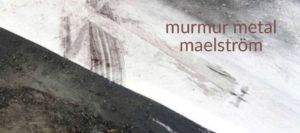
Vallée du bout du Monde à Thiers. Ce disque, "Maelström" est une sélection d’enregistrements et un
aboutissement de dix ans d’expérimentation sur des objets métalliques.
Il réunit deux aspects du travail du guitariste sur le matériaux métal :
acoustique et electroacoustique.
"Maelström" is a protean project created in 2010 after finding raw material in a dumpster
of a small metal factory in the Vallée du bout du Monde in Thiers (France). David Bausseron's project is a selection of recordings and the result of ten years of
experimentation with metal objects. It brings together two aspects of
the guitarist’s work on metal materials: acoustic and electroacoustic.
La pièce "VRTN" de l'artiste Peter Orins est une variation de la pièce "Happened By Accident", objet du disque éponyme sorti en 2019.
Elle reprend l’utilisation de la batterie en résonateur d’objets
divers, bois, métal, verre, et la prépondérance de l’inattendu, par
l’introduction d’accidents et d’interactions. Le musicien y ajoute le
traitement électronique, qu’on retrouve dans son premier disque.
"VRTN" is a variation of the piece Happened By Accident", the subject of the eponymous album released in 2019.
It takes up the use of drums as a resonator of various objects,
wood, metal, glass, and the preponderance of the unexpected, by
introducing accidents and interactions. The musician adds electronic
treatment, which we find in his first record.
Peter Orins fait aussi partie du trio TOC en compagnie de Jeremie Ternoy et Ivann Cruz. Ajoutons à cela la saxophonisteSakina Abdou et la pianiste Barbara Dang, et cela mène à un nouveau disque du collectif ADOCT"Ouvre Glace" également publié chez Circum-Disc.
Premier album de Banusoi, groupe tchécoslovaque qui sort donc "imagines", collection d'histoires entrelacées, mélange délicat de matériaux abstraits et bruts, métissées d'improvisation radicale et de sons électroniques, sans oublier quelques mélodies surgissantes.
First album by Banusoi, a Czechoslovakian group which is therefore releasing "imagines", a collection of intertwined stories, a delicate mix of abstract and raw materials, mixed with radical improvisation and electronic sounds, not to mention some popping melodies.
Un disque du groupe Le bruit des Dofs avec Jean-Louis Morais (guitare), Olivier Verhaeghe (basse) et Charles Duytschaever (batterie) : un jazz puissant aux accents psychédéliques imprégné de rock progressif qui clame sa rage, goûte la transe et plonge dans un délire frénétique.
A CD by the band Le bruit des Dofs with Jean-Louis Morais (guitar), Olivier Verhaeghe (bass) & Charles Duytschaever (drums) : a powerful jazz with psychedelic accents imbued with progressive rock which proclaims its rage, tastes the trance and plunges into a frenetic delirium.
The departure of our friend Amha Eshete (Amha Records) from Ethiopia’s great modern music scene follows five weeks after the death of Ali Tango (Kaifa Records). A music lover through and through, a lone pioneer of record production in his country, a daring young entrepreneur, an alternative activist before his time (and something of a combative dude), a gentleman outlaw, Amha managed to circumvent Emperor Haile-Selassie’s state monopoly which did not publish any modern music and banned the importation and production of records.
“I had a gut feeling that it was the thing to do. I thought, nobody’s going to kill me for this. At most I might land in jail for a while.”A.E.
The Amha Records catalogue includes more than 100 vinyl references, released between 1969 and 1975. The very essence of Ethiopian pop golden oldies. Nearly all of them have been reissued in the "Ethiopiques series". Ethiopian pop is now firmly established, everywhere. Without Amha Records and Kaifa Records, there would have been no Éthiopiques.
Cinq semaines après Ali Tango (Kaifa Records), c’est au tour de notre ami Amha Eshèté (Amha Records) de quitter la grande scène de la musique éthiopienne moderne. Music lover absolu, pionnier solitaire de la production discographique dans son pays, jeune entrepreneur téméraire, activiste alternatif avant la lettre (tendance dandy combatif), gentleman hors-la-loi, Amha sut prendre le risque de passer outre un décret sur l’importation et la production de disques que l’empereur Haylé-Sellassié avait promulgué et qui réservait ces activités à un monopole d’Etat, lequel ne publiait aucun disque de musique moderne.
"Intuitivement, j’avais la conviction que c’était ça qu’il fallait faire. Je pensais qu’on ne me tuerait pas pour ça. Peut-être, à la limite, je risquais un peu de prison…"A.E.
Le catalogue Amha Records comporte plus de 100 références vinyles, publiées entre 1969 et 1975, l’essence même des goldies de la pop éthiopienne. Sa quasi-totalité a été rééditée dans la série "éthiopiques". La pop éthiopienne est désormais gravée dans la pierre, partout. Sans Amha Records ni Kaifa Records, il n’y aurait pas eu d’éthiopiques.