" – Peu importe d’où l’on vient. Il n’y a pas de tonique. Le thème et son développement ne sont qu’un mirage…
Il y a une musique toujours inattendue.
– Et les dissonances ?
– Dieu les a créées, elles aussi…"
Jaume Cabré - "Voyage d'hiver" - 2014

”La terre, il se pourrait bien après tout que ce soit une espèce
de merveilleux petit appareil enregistreur, plaçé là par on ne sait qui,
pour capter tous les bruits qui circulent mystérieusement dans l’Univers.”
Pierre Reverdy - ”En vrac” - 1929

”J’entends tous les bruits de la terre grâce à mes oreilles et mes nerfs de cristal
dans lesquels circulent le feu du ciel et celui des volcans.”
Michel Leiris - ”Le point cardinal” - 1927

"L'écoute, c'est l'ombre de la composition"
Pascal Dusapin - 2008


Affichage des articles dont le libellé est John Cage. Afficher tous les articles

11/01/2022

Cage & Tudor - 1963


The famous lecture/performance of John Cage with David Tudor
in Germany, in january 1963,

"Musik Im Technischen Zeitalter"

 with a patient and intrigated audience, who reacted largely with incomprehension.


The purpose was indeterminacy, chance, change and new aspects of music
with new technicals ways and tools for creative process.

In the winter of 1962–63 the writer on music and supporter of contemporary music Hans Heinz Stuckenschmidt, professor at the Technische Universität in Berlin, ran the international lecture series Musik im technischen Zeitalter. John Cage was invited to give a lecture with musical examples. He transformed the live broadcast into a performance of, in Stuckenschmidt’s words, “methods of surprise and terror” determined by chance operations, in which he and the pianist and composer David Tudor performed two compositions by Cage (Variations II, 1961, and Fontana Mix, 1958) simultaneously.


Filmed by the former German public television broadcaster SFB in West Berlin.


*I*I*

15/02/2020

Beyond 20 Hz–20 kHz


"It seems to me that the most radical redefinition of music would be one that defines 'music' without reference to sound."
Robert Ashley - 1961
in "Experimental Music"  by Michael Nyman - 1974


" L'homme  est un  organisme vivant qui tape, fait de la mauvaise musique et laisse aboyer son chien. Quelquefois  il ne  fait pas de bruit, mais c'est qu'il est mort " ...
..."Chat et chien - ils vivent en paix côte à côte.
Lorsque j'ai vu cela pour la première fois, j'ai cru à un miracle de dressage, tellement j'étais enclin, venant d'Allemagne, à considérer comme originel l'état où l'on passe son temps à montrer les dents, à hurler, à menacer et à aboyer. Mais après avoir observé d'innombrables fois que chats et chiens vivent ici en bonne harmonie, j'eus l'impression que ce ne devait sûrement pas être le cas." 

Kurt Tucholsky

Kurt Tucholsky qui vécut en France dans les années 20 quittera sa résidence du Vésinet en 1926 pour Fontainebleau, à cause du vacarme insupportable des chiens du voisinage!...
<<<...>>>

 
IIIIIII

"It is better to make a piece of music than to perform one, better to perform one than to listen to one, better to listen to one than to misuse it as a means of distraction, entertainment, or acquisition of "culture."
John Cage 


III

" ... j'ai toujours pensé aux peintures blanches comme n'étant pas passives, mais... en fait, hypersensibles. ... 
Si bien qu'on pouvait les regarder et pratiquement voir, d'après leurs ombres portées, combien de personnes étaient dans la pièce, ou à quelle heure de le journée il était..."
Robert Rauschenberg


Robert Rauschenberg “Erased de Kooning Drawing”
via woody wood cutter
 
III
 

"Without music, life would be a mistake. "
Friedrich Nietzsche


°°°°°°

01/05/2019

Cage & Tudor


John Cage & David Tudor in 1972

This is an interview with John Cage & David Tudor, conducted in French and English.

This particular interview was purportedly recorded on May 29, 1972, a time at which both John Cage and David Tudor were on a European tour featuring performances in London, Bremen, Paris and other European cities. Cage talks about the influence that Henry David Thoreau, Marcel Duchamp, and others have had on his own artistic output. Works discussed include Cage’s “Mureau” and David Tudor’s “Rainforest,” which were performed simultaneously during their 1972 European concerts. Another pairing of the two composer’s works, Cage’s “62 Mesostics Re Merce Cunningham,” and Tudor’s “Untitled” is also discussed. Towards the end of the program David Tudor talks about his decision to play the piano less, and instead focus on his own electronic music.


Part 1 


Cage & Tudor 1954 - pic courtesy of the New York Public Library

&  part 2   on archiv.org


****

04/02/2019

4'33" - fiction


Giovanni Papini

Deux visions futuristes de l'orchestre par l'écrivain italien Giovanni Papini (1881-1956)
dans son étonnant roman "Gog" publié en 1931:
- la première comme un immense fracas industriel,
- la deuxième comme une prémonition de 4'33" de John Cage!


Extrait du formidable travail d'encyclopédiste de Pierre Versins (1923-2001) 
qui a rédigé de 1961 à 1972 l'inestimable 
éd. l'Âge d'Homme (1972) (rééd. 1984)


***

01/07/2018

Time sequence

 Toshi Ichiyanagi & Yoko Ono(1961)

The composer Toshi Ichiyanagi (1933) is a leading japanese figure of the avant-garde 
who studied with different artists as John Cage. 
He was married with Yoko Ono from 1956 to 1963.
He wrote graphic and aleatoric scores as well more classical ones.
He was involved in electronic music in the 60s, avalaible on "Edition Omega Point".

     ”Music for Electric Metronome” - 1960 - published in ”An Anthology of Chance Operations”

”Music for Electric Metronome” is an aleatoric composition for 3 to 8 players.
Toshi Ichiyanagi uses numbers as instructions for an erratic drift with chance for support.


 ***


Under influence of Fluxus, 
Toshi Ichiyanagi organized in 1962 at Galerie Minami in Tokyo a huge exhibition 
which was visited by John Cage: ”International Graphic Scores Exhibition”.

 ***
"Time Sequence" for piano was composed in 1976
here played by the bodybuilder Gene Hirano,
strangely suited for such a concert!


02/09/2016

Morton Feldman


A fascinating conversation of Morton Feldman with the composer Charles Shere in 1967. (on archiv.org)
Which speaks of John Cage, Karl Marx, Christian Wolff , Stockhausen, Anton Webern... and many others.


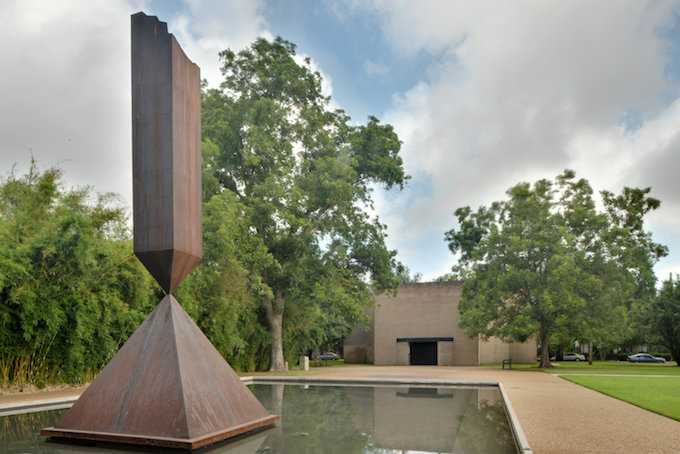
Created by the American painter Mark Rothko, Rothko Chapel is a spiritual environment, a space for contemplation where men and women, believers or not, may meditate in silence, in solitude or in a common celebration. In this chapel, built in 1971 by the Menil Foundation in Houston-Texas, Rothko painted fourteen large canvases.


enjoy the amazing 1971 piece "Rothko Chapel"
for soprano, contralto, doble choir & 3 instruments 


04/11/2015

Inside the silence


http://preparedguitar.blogspot.com.es/2015/11/away-from-big-cities-morton-feldman.html


" Jean-Yves Bosseur: Does silence play a role in your music?
Morton Feldman: My music is inside the silence..." 


A very interresting interview of Morton Feldman by the young composer and musicologist Jean-Yves Bosseur in 1967 on the website "prepared guitar"
A conversation which happily complete the famous talk in between John Cage and Feldman the same year.


Just notice, for french spoken people, that this famous relax talk
titled "Radio happenings" is now published in french by éditions Allia.


A splendid interpretation of Morton Feldman's 1957 work "two pianos" by John Tilbury & Philip Thomas. 
From the double CD of Feldman works for multiple pianos: "Two Pianos and other pieces 1953-1969" on the label  Another Timbre.

13/06/2013

Experimental music


This 2005 ' BBC's movie, titled "Here's a piano I prepared earlier" , directed by John Warburton, was made with the searcher Jacob Blimsy.
It features John Tilbury, Stella Cardew, Hugh Davies, John White, Gavin Bryars, Sarah Walker, David Bedford & others.
It traces music's most daring innovators of the 60s as Cornelius Cardew, Stockhausen, Michael Nyman, John Cage, Terry Riley & the Portsmouth Sinfonia.


Here's a Piano I Prepared Earlier (3rd Dec 2005) TVRip XviD from phil scorzonera on Vimeo.

04/10/2012

The future of music


"I believe that the use of noise to make music will continue and increase until we reach a music produced through the aid of electrical instruments which will make available for musical purposes any and all sounds that can be heard.
Photoelectric, film, and mechanical mediums for the synthetic production of music will be explored. Whereas, in the past, the point of disagreement has been between dissonance and consonance, it will be, in the immediate future, between noise and so-called musical sounds.
The present methods of writing music, principally those which employ harmony and its reference to particular steps in the field of sound, will be inadequate for the composer, who will be faced with the entire field of sound. New methods will be discovered, bearing a definite relation to Schoenberg's twelve tone system and present methods of writing percussion music and any other methods which are free from the concept of a fundamental tone. The principle of form will be our only conxtant connection with the past. Although the great form of the future will not be as it was in the past, at one time the fugue and at another the sonata, it will be related to these as they are to each other: through the principle of organization or man's common ability to think..."

 John Cage - "The Future of Music: Credo" in "Silence, Lectures and Writings" 
Wesleyan University Press, 1961, p.3-6.

28/09/2012

Conférence sur rien


The movie "Conférence sur rien", a french reading by Eve Couturier of the John Cage's "Lecture on nothing"
was part of the movies' program in the exhibition "Cage's Satie: composition for museum" curated by Laura Kuhn, director of the John Cage Trust in New-york, at Lyon (France) at the contemporary art museum "Mac-Lyon" december 2012.

movie by Jean-Jacques Palix
french translation & lecture par Eve Couturier 


duration : 52 minutes 

Paris - 2002
 

05/09/2012

100 years

John Cage was born on the 5th september 1912, 100 years ago precisely.


Sonata V from "sonatas and interludes for prepared piano"
played by Bobby Mitchell.
(my best version is still by Gérard Frémy)

18/07/2012

Noise 2

"Sound come into its own". What does that means? ... it means that noises are as useful to new music as so-called musical tones, for the simple reason that they are sounds...

~ Christian Wolff ~


"Wherever we are, what we hear is mostly noise. When we ignore it, it disturbs us. When we listen to it, we find it fascinating."

~ John Cage  -  "The future of music: Credo"  (1937)  ~

01/04/2012

Tacet

Tacet, a brillant publication around John Cage directed by Matthieu Saladin.
(in english and french langage) 


with contributions by Matthieu Saladin, Philip Gentry, Sarah Troche, Jean Yves Bosseur,
Xavier Erkizia, Seth Kim-Cohen, Michel Pisaro, Sophie Stévance, Mattin, Jérôme Noetinger,
Radu Malfatti & Toshiya Tsunoda
as well John Cage' documents


Tacet : s. m. Mot latin qu'on écrit sur une partie de musique pour indiquer que la voix ou l'instrument doit garder le silence pendant toute la durée du morceau ou du mouvement. Fig. et familièrement: tenir, garder le tacet, ne pas parler, ne pas dire un secret.


"... the word "experimental" is apt, providing it is understood not as descriptive of an act to be later 
judged in terms of success and failure, but simply as of an act the outcome of which is unknown."
John Cage, Silence


25/03/2012

4'33" - BBC concert

This three  movement composition of John Cage , composed in 1952, was performed
on january 16, 2004 at the Barbican Center in London, with the BBC Symphony Orchestra
as the first orchestral interpretation of this piece.
The original manuscript was dedicated to David Tudor.

Here, a version with unknown players, The BBC 's one just disappeared from YouTube.


***

03/03/2012

Painted silence

     Robert Ryman

"... in the work of Robert Rauschenberg, who in the 1950s produced several 
all-white and all-black paintings. The white paintings helped inspire Cage 
to write 4'33", so we can see some interesting crossover occuring 
between the  arts at this point. Cage was to write admiringly of the paintings, 
that they constituted 'airports for the lights, shadows, and particles. 
Robert Ryman is another artist who has exhibited all-white paintings, 
and Ad Reinhardt all-black. In each case the critical response has been 
to raise the issue of silence, of what the artist is choosing not to do, 
although that silence has been interpreted in a variety of ways... ..."

in "Manifesto for Silence"  by  Stuart Sim - Edinburg University Press Ltd - 2007
 
***
 
 Robert Rauschenberg “Erased de Kooning Drawing”
 
” ... j'ai toujours pensé aux peintures blanches comme n'étant pas passives, mais... en fait, hypersensibles. ...
Si bien qu'on pouvait les regarder et pratiquement voir, d'après leurs ombres portées, combien de personnes étaient dans la pièce, ou à quelle heure de le journée il était..."
  Robert Rauschenberg


  Igor Malevich

-_-_-

19/02/2012

Silence


"It is better to make a piece of music than to perform one, better to perform one than to listen to one, better to listen to one than to misuse it as a means of distraction, entertainment, or acquisition of "culture."
John Cage 


-_-_-
 

"A painter paints pictures on canvas.  But musicians paint their pictures on silence."
Leopold Stokowski
 
 
_ _ _ _

02/10/2011

New ideas

"I can't understand why people are frightened of new ideas. I'm frightened of the old ones." 
John Cage