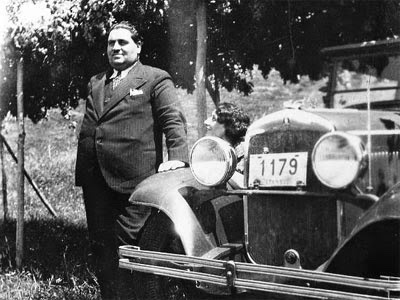
" – Peu importe d’où l’on vient. Il n’y a pas de tonique. Le thème et son développement ne sont qu’un mirage…
Il y a une musique toujours inattendue.
– Et les dissonances ?
– Dieu les a créées, elles aussi…"
Jaume Cabré - "Voyage d'hiver" - 2014

”La terre, il se pourrait bien après tout que ce soit une espèce
de merveilleux petit appareil enregistreur, plaçé là par on ne sait qui,
pour capter tous les bruits qui circulent mystérieusement dans l’Univers.”
Pierre Reverdy - ”En vrac” - 1929

”J’entends tous les bruits de la terre grâce à mes oreilles et mes nerfs de cristal
dans lesquels circulent le feu du ciel et celui des volcans.”
Michel Leiris - ”Le point cardinal” - 1927

"L'écoute, c'est l'ombre de la composition"
Pascal Dusapin - 2008


Affichage des articles dont le libellé est oriental. Afficher tous les articles

13/05/2025

Beirut Birds


Beirut Birds est une capsule sonore qui rend hommage aux récits (inter)personnels de migration, de déplacement et aux turbulences cycliques du Liban. Transformant son projet pluriannuel, l'artiste et compositrice multidisciplinaire Nour Sokhon cristallise la performance "Beirut Birds" en son premier album tant attendu. Présenté et interprété en direct, il est accompagné d'images juxtaposées de la vie urbaine de la capitale libanaise et de la migration aviaire à travers la mer Méditerranée, représentant des thèmes fortement ancrés dans la musique.

Dans son processus artistique varié, Nour Sokhon a réalisé et enregistré des entretiens avec des diasporas et des rapatriés afin de commémorer, partager, guérir et imaginer. Ces sources deviennent les éléments centraux de l'album, qui tournent en boucle, racontent et reviennent au fil du temps, Nour y répondant avec ses instruments et sa voix. En dialoguant avec les personnes interviewées, en créant des quasi-mantras, Nour rassemble ces paysages sonores profondément ancrés dans la matière en incluant des enregistrements de terrain qu'elle a recueillis entre 2018 et 2021 au Liban et lors de son installation ultérieure à Berlin.

La composition intègre des sons manipulés provenant d'objets symbolisant la migration, tels que des sonnettes de bureau, une roue de bagage, des pièces détachées automobiles et des documents administratifs. Musicalement, les chansons sont enrichies par les improvisations de Nour au piano classique, à l'électronique, aux synthétiseurs, au violon et à divers instruments de percussion. À mesure que le temps se sculpte et que les couches se brouillent, les mots deviennent des spectres, tandis qu'un orchestre entropique de percussions et de mélodies s'élève, donnant forme à un espace intermédiaire pour ceux qui sont partis et sont restés.


Beirut Birds is a sonic memory capsule honoring (inter)personal stories of migration, displacement, and the cyclical turbulent circumstances in Lebanon. Transforming her multi-year project, multidisciplinary artist and composer Nour Sokhon crystallizes the performance Beirut Birds into her long-awaited debut album. When presented and performed live, it is accompanied by juxtaposed images of the Lebanese capital’s city life and avian migration across the Mediterranean Sea, representing themes strongly woven into the music. 

 a paper on "a closer listen" about Nour Sokhon

<!>


21/02/2025

Ya Jarata al wadi


Nour Al-Houda est une actrice et chanteuse née en Turquie en 1924 et décédée au Liban en 1998. Partenaire du musicien et compositeur égyptien  Mohammed Abdel Wahab , elle reprend certaines de ses chansons et notamment "Ya Jarata al Wadi".

Une superbe interprétation et un formidable orchestre dans la plus pure tradition.  

22 minutes de pur bonheur : un bijou d'exception! 


Nour Al-Houda is an actress and singer born in Turkey in 1924 and died in Lebanon in 1998. Partner of the Egyptian musician and composer Mohammed Abdel Wahab, she covers some of his songs and notably "Ya Jarata al Wadi". An amazing interpretation with a formidable orchestra in the purest tradition. 

an exceptional jewel!

*** 

The next song below, titled "Oh Neighbor of the Valley", was recorded by the Arabic-music composer/singer Hassan Ghandour. Nour was visiting the radio station—she was a friend of Hassan Ghandour—and when she came down to the studio to say hello to him, he smiled and said to her, word for word: "Nour, come on—I want to test the station's new recording equipment. Go in and sing anything." 

this "a cappella" song by Nour Al-Houda HERE 

.._-!I!-_..

09/08/2024

Aïcha Redouane


Aïcha Redouane, née en 1962, est une artiste berbère née au Maroc, à Aït Attab dans le Moyen-Atlas.  

 De renommée internationale, elle a revivifié l’art du maqâm arabe et fondé l’ensemble al-Adwâr, orchestre de musique savante du Proche-Orient, avec le compositeur Habib Yammine. Jeune, elle se passionne pour le répertoire classique égyptien, dont elle écoute des enregistrements de référence sur de vieux 78 tours. Elle chante dans plusieurs styles: berbère, jazz-blues, chant classique occidental et arabe... Formidable voix avec sa puissance d'émotions, un grand raffinement avec ses mélopées et son sens de la nuance.

à noter (et écouter!) sa spectaculaire présence dans le "Stabat Mater" de Bruno Coulais


Aïcha Redouane, born in 1962, is a Berber artist born in Morocco, in Aït Attab in the Middle Atlas.  

Internationally renowned, she revived the art of Arab maqâm and founded the al-Adwâr ensemble, a scholarly music orchestra from the Middle East, with the composer Habib Yammine. Young, she was passionate about the classical Egyptian repertoire, listening to reference recordings on old 78 rpm records. She sings in several styles: Berber, jazz-blues, classical Western and Arabic singing... Formidable voice with its power of emotions, great refinement with its chants and its sense of nuance.

note (and listen!) her spectacular presence in the Bruno Coulais's piece"Stabat Mater"


at UNESCO in Paris (2006) with Salah el-Din Mohamed : Qânûn & Tammâm Akkari : Ûd & Habib Yammine : Riqq 


<><><>

15/06/2024

Hafiz Burhan


Hafiz Burhan (1897-1943) est un des plus grands chanteurs influents des débuts de la République Turque. Jeune homme, il exerce les activités de muezzin, et étudie la musique religieuse, et par la suite ne peut résister à élargir son répertoire avec son extraordinaire voix de ténor. Pour la jeune Radio Istanbul et la compagnie Columbia, il enregistre de nombreuses chansons, berceuses, odes et chansons d'opérette, ainsi que pour de nombreux films.

 
Hafiz Burhan (1897-1943) is one of the biggest influential singers of the early days of the Turkish Republic. Young man, he exercises the muezzin activities and studying religious music, and then can not resist to expand its repertoire with its extraordinary tenor voice. For the young Radio Istanbul and the Columbia company, he recorded many songs, lullabies, odes and songs for many films.


and many other pieces to listen to, as well a tango "Aşkın Gözyaşları" 
 
0o-o0

15/11/2023

Free journeys


Youmna Saba  - "Wishah" - novembre 2023 

"Wishah" , on Touch, is the last album marking a significant turning point in Youmna Saba's journey. Created after leaving Beirut and settling in Paris, "Wishah" reveals a profound shift in her musical expression, informed by rigorous research in the sonic properties of sung Arabic phonemes and their role in shaping synthesised electronic sounds.  The album employs a digital extension for the oud, a concept developed by Saba in her research project Taïma’. 

As well you have to visit Youmna Saba's installation concerning "La réserve des non-dits" at Musée du quai Branly in Paris. The artist went to capture the breath of musical instruments in the heart of the "instrument tower", a protected and optimized environment to ensure the proper conservation of the Museum's collection of musical instruments. The installation offers a zoom on the micro-sounds emitted by these instruments in their passive state, their resonances, their voices. It is a way of revealing the inaudible, of exhuming traces of sounds and other residual images, of transcribing their unwritten stories, the information that these instruments capture and record in their bodies, as close as possible to their material. To listen to samples.
​


"Wishah", sur Touch, est le dernier album marquant un tournant important dans le parcours de Youmna Saba. Après avoir quitté Beyrouth et s'être installée à Paris, sa pièce "Wishah" révèle un changement profond dans son expression musicale. Cette pièce relève d'une recherche rigoureuse sur les propriétés sonores des phonèmes arabes chantés et leur rôle dans la formation de sons électroniques synthétisés. L’album utilise une extension numérique pour le oud, un concept développé par Saba dans son projet de recherche Taïma’.
 
 
Egalement visiter l'installation de Youmna Saba concernant "La réserve des non-dits" au Musée du quai Branly. L'artiste est allée capter le souffle des instruments de musique au cœur de la "tour des instruments", un environnement protégé et optimisé pour assurer la bonne conservation de la collection d'instruments musicaux du Musée. L’installation propose un zoom sur les micro-sons qu’émettent ces instruments dans leur état passif, leurs résonances, leurs voix. C’est une manière de révéler l’inaudible, d’exhumer les traces de sons et autres images résiduelles, de retranscrire leurs histoires non-écrites, les informations que ces instruments captent et enregistrent dans leurs corps, au plus près de leur matière. Quelques exemples à écouter.
 

___***___


Jürg Frey  - "Circular music" - septembre 2023

"Circular music", on Insub Records, is composed by the swiss artist Jürg Frey. His work is made up of large sound spaces and silence as essential component. The 3 ecstatic pieces of this issue calls upon dreams. Highly recommendable!

with  Clara Lévy : violin - Victor Guaita : viola - Michaël Liberg : cittern
Yannick Guédon : voice - Antoine Läng : voice - Stan Maris : accordion (2-3)
Florence Cats : theremin & d’incise : indian harmonium (1), electronic (2-3)


"Circular music", sur Insub Records, est une pièce composée par l'artiste suisse Jürg Frey Son œuvre est constituée de grands espaces sonores et le silence comme composante essentielle. Les 3 pièces extatiques de ce nouvel opus font appel au rêve. Hautement recommandable !
 
 
!!!!!!!!!!!!!!!

13/10/2023

Naghib Shanbehzadeh


Naghib Shanbehzadeh

Né en 1993 à Boushehr en Iran, Naghib Shanbehzadeh a commencé à jouer de la musique dès l’âge de trois ans en faisant de la musique aux côtés de son père Saeid. Ayant reçu une double transmission orale (percussions traditionnelles du sud de l’Iran -Dammam, Doholgap, Pipe, Kesser, Timpo, de sa propre région et Zarb de la musique traditionnelle iranienne) et écrite (percussions occidentales au conservatoire de Créteil), il peut se prévaloir de plus d’une décennie d’expérience scénique en solo et aux côtés de musiciens de renommée internationale: il a partagé la scène avec de nombreux grands musiciens de différents genres tels que Manu Kodjia, Billy Cobham et Trilok Gurtu, etc. Il est membre permanent de l'Ensemble Shanbezadeh depuis l'âge de 10 ans. 

***

Born in 1993 in Boushehr, Iran, Naghib Shanbehzadeh began playing music at the age of three, making music alongside his father Saeid. Having received a double oral transmission (traditional percussion from the south of Iran -Dammam, Doholgap, Pipe, Kesser, Timpo, from his own region and Zarb from traditional Iranian music) and written (Western percussion at the Créteil conservatory), he can boast of over a decade of stage experience both solo and alongside internationally renowned musicians: he has shared the stage with many great musicians from different genres such as Manu Kodjia, Billy Cobham and Trilok Gurtu, etc. He has been a permanent member of the Ensemble Shanbezadeh since the age of 10.


a pure jewel

!!!!!


07/06/2023

The wind

The iranian master of kamancheh Kayhan Kalhor with the turkish baglama player Erdal Erzincan exploring improvisation at the nexus where Persia and Turkey meet, live at Millenium Stage in january 2013.

a pure jewel...


this post was first published on august 2014
 
'!''-I-''!'

11/05/2023

Mustapha Skandrani


Mustapha Skandrani (1920-2005) est un pianiste, interprète et compositeur de musique Chaâbi algérien et de musique arabo-andalouse. Le Chaâbi (de l'arabe الشعبي əš-šaʿabī) est un genre musical algérien provenant de la musique arabo-andalouse. Šaʿabī signifie "populaire" en arabe, c'est l'un des genres musicaux les plus populaires d'Algérie. 

Mustapha Skandrani a composé plus de 300 morceaux du Chaâbi et de nombreuses  compositions pour qsayed et chansonnettes. Il dirige les orchestres du précurseur et grand maître du Chaâbi  El Hadj M'hamed El Anka, El Hachemi Guerouabi, Amar Ezzahi, l'inoubliable  Reinette l'Oranaise et plusieurs autres grands chanteurs algériens. 

Mustapha Skandrani (1920-2005) is a pianist, performer and famous composer of Algerian Chaâbi music and Arab-Andalusian music. The chaâbi (from Arabic الشعبي əš-šaʿabī) is an Algerian musical genre which comes from Arab-Andalusian music. Šaʿabī  means "popular" in Arabic, it is one of the most popular musical genres in Algeria.  

Mustapha Skandrani composed more than 300 modern songs from Chaâbi and lot of  compositions for Qsayed. He was the conductor of the orchestras of the pioneer master of Chaâbi El Hadj M'hamed El Anka, El Hachemi Guerouabi, Amar Ezzahi, the unforgettable Reinette l'Oranaise and several other great Algerian singers.


et aussi écouter le disque "Stikhbar"


0II00III0-0II00III0-0II00III0-0II00III0

10/03/2023

Dastgāh Šur


Persian classical "dastgāh Šur" (modal system) performed by Lloyd Miller on oud with Azar Hashemi on santur on National Iranian TV in the 1970s.
The dastgāh system has been a major influence in the maquam system of arabic music.
Šur is one of the 12 dastgāh.


*I-I*

24/09/2022

Nasim Kushnawaz & Afghan rubab

Residing in exile in Iran, Nasim Kushnawaz is a master of the Afghan rubab. He is the son of Ustad Rahim Khushnawaz, a well-known master of the instrument who helped to put the rubab and the musicianship of Herat (nicknamed the “pearl of Khorasan”) on an international stage.

"Songs From The Pearl of Khorasan" is its first single which takes influence from traditional Herati folk pieces and three classical Afghani pieces - with Ramin Ahmadi playing tabla. With Afghanistan once more falling to the Taliban, it’s a good opportunity to continue to hear Afghan folk and classical music.

a review on the blog  "a closer listen"

***

Nasim himself sits as the subject of a documentary directed by Michel Gasco and titled "Nasim, the Territory of Memory". His journey is truly unique: after surviving a car accident that left him in a coma for weeks, Nasim suffered from an amnesia that forced him to relearn both his family and the rubab once more. 


***


 &

"Sahargah"  (means "sunrise")


<>III<>

25/08/2022

Nozhet El Nofous


Nancy Mounir est une compositrice basée au Caire. Multi-instrumentiste, elle explore différents territoires musicaux, et notamment avec une certaine inclination à transfigurer les musiques arabes et égyptiennes. Son premier album "Nozhet El Nofous" (Promenade des âmes) rend hommage à quelques célèbres ou obscures chansons égyptiennes du début du XXème siècle en les transcendant par l'ajout de divers instruments (violon, piano, accordéon, theremin...) qu'elle joue elle-même.


"En travaillant, je n’aime pas être classée dans un genre particulier. Je ne travaille pas selon les genres. En arrangeant une chanson ou un morceau, je réfléchis simplement à ce dont cette pièce a besoin pour être bien écouté" - Nancy Mounir


Cairo-based composer, arranger, and multi-instrumentalist Nancy Mounir sits amongst an array of instruments in her studio while she talks about her new album, "Nozhet El Nofous" (“Promenade of the Souls”). Behind her, there’s a wall lined with guitars; there’s also a double bass, a piano, a violin, an accordion, and even a theremin. “They never feel enough”, she says, listing off a few more instruments she’d like to learn.  Mounir’s interest in working with many different sounds drives her musical practice, and "Nozhet El Nofous" builds on that passion by lacing her original compositions with archival recordings of early 20th-century Egyptian songs, all of which tell intimate stories.

“I first started researching their music, because I deeply connected with what these artists were singing about” - Nancy Mounir

more infos about the Egyptian singers 


Nancy Mounir on Sound Cloud

with this particular song "El Ors" (2015) 


*^*^*^*

17/07/2022

Haïra


Kamilya Jubran est une chanteuse d'origine Palestinienne, née en 1962 en Israël, vivant en Europe.


"Haïra" avec
Kamilya Jubran : oud et chant
Werner Hasler : trompette et musique électronique
Sarah Murcia : contrebasse et Roland S.H. 101
Salman Masalha : textes 
 
   
and a whole concert in duo (Sarah and Kamilya) 
for the french radio show "à l'improviste"
recorded in 2018 to listen to HERE

I*°_V_°*I

25/02/2022

Hossein Alizadeh


Hossein Alizadeh is a famous Iranian composer and Tar and Setâr  instrumentalist. Born in 1951 in Teheran, he also is a teacher and great preserver of the persian Radif tradition, a musical corpus of old melodic figures preserved through many generations by oral tradition. 

The Setâr is a stringed instrument, a type of lute played solo or accompanying voice. It is a member of the Tanbur family of long-necked lutes with a range of more than two and a half octaves. Originally a three stringed instrument, a fourth string was added by the mid 19th century.


Here is a fascinating Setâr improvisation in concert with Dariush Zargari playing the Zarb.


You can also check the amazing setâr player Khorshid Dadbeh. 

& the Iranian master of Kamancheh Kayhan Kalhor who uses as well to practice the Setâr.


_OIOIO_

07/09/2020

Alger


à paraître le 10 septembre 2020 aux Editions Verdier.


Avec  sensibilité l'auteur fait se rencontrer les grands rendez-vous historiques, souvent tragiques,
de cette ville et de ces territoires d’Algérie et la saga de sa propre famille.
Très touchants sont les détails de son enfance, d’une robe portée, d’un chemin
pris pour se rendre à l’école, d’une photo d'une maison habitée ou convoitée,
d’un gâteau dégusté … etc...
Avec l'humilité de son ignorance avouée de l’ignorance de certain(e)s des protagonistes de l’histoire
de sa famille, Béatrice Commengé nous fait traverser cette ville envoûtante
ainsi que son histoire encore française des années 60.


*--_--*

06/03/2019

Aynur Dogan


The 2018' very famous singer and cultural icon of the Kurdish people
  Aynur Dogan
live with the Morgenland Chamber Orchestra


"Keca Kurdan"
Aynur & the Morgenland Chamber Orchestra, 
featuring Ibrahim Keivo (vocals), Kinan Azmeh (clarinet), Cemil Qocgiri (tembur), 
Rony Barrak (darbouka), Hussein Zahawy (daf) 
conducted by Naci Özgüc 
Arrangement: Wolf Kerschek 
filmed by Günter Wallbrecht


dont let the Kurds fall !

&
listen to this amazing piece with fabulous darbouka and daf solits


and another version

***

06/12/2018

Dilek


Les trois virtuoses Vincent Segal, Derya Türkan & Savaş Özkök 
se rencontrent pour un voyage mental aux confins de l'Anatolie. 

Entre chants mystiques soufis ou alévis 
et leurs propres compositions revisitées pour l’occasion.
------

The three virtuosos Vincent Segal, Derya Türkan & Savaş Özkök meet 
for a mental journey to the Anatolian bondaries.
Between Sufi mystic and Alevi' songs, as well their own compositions revisited.

 
*-*

Vincent Segal : cello
Derya Türkan : kemençe

“Indim Yarin Bahçesine” – composition Derya Türkan
live concert in Geneva - November 2018 


***

15/08/2018

Mohammad Reza Lotfi

Mohammad Reza Lotfi (1947-2014) is an persian maestro of classical music playing tar and setar. He worked at the Center for the Preservation and Propagation of Traditional Persian Music, both as a soloist and a conductor. He researched folk music for Iranian National Radio and Television, and appearing at the Shiraz Arts Festival. After graduating in 1973, Lotfi joined the faculty of Fine Arts at Tehran University. 

His innovative approach of combining the classical with folk elements, both in terms of music and technique, has injected a new vitality into a very old tradition. 


***

12/03/2017

Quatuor Béla


Fondé en 2006 par quatre musiciens des CNSM de Lyon et Paris – Julien Dieudegard et Frédéric Aurier, violons, Julian Boutin, alto, Luc Dedreuil, violoncelle –, le Quatuor Béla s’est réuni autour du désir de défendre le fabuleux répertoire du XXe siècle ainsi que la créa­tion contemporaine.

"Le Quatuor Béla est une jeune formation pratiquant le répertoire pour quatuor à cordes des Xxème et XXIème siècles avec un engagement et une exigence rares. Mais c’est aussi une association d’instrumentistes extrêmement curieux de croiser leur expérience avec d’autres musiciens provenant de territoires musicaux singuliers, qu’ils viennent du rock, du jazz, de la musique improvisée ou de l’univers des musiques traditionnelles." Arnaud Petit, compositeur.
 
“The Quatuor Béla has this grace, this «je ne sais quoi» which speaks Jankélévitch, this irreducible thing, we can not capture or imitate in sound distinction, the hairline of the performance, the clarity of the subject. Of course, there is the technical virtuosity, which is no longer rare. The young French musicians today have often breathtaking technical level. There, before, there is musicality. These people do not flirt, they love.”
Jean-Marc Warszawski, Musicologie.org, May 2009

http://quatuorbela.com/en/le-quatuor-bela/biographie/

Curieux et enthou­siasmés par la diversité des courants musicaux d'aujourd'hui, les membres du Quatuor Béla s’asso­cient souvent à des figures artistiques emblématiques parmi lesquels le jeune maître du oud Ahmad Al Khatib, la chorégraphe aixoise Josette Baiz et sa Compagnie Grenade, la chanteuse Elise Caron...

"Jadayel" : Le Duo Sabîl et le Quatuor Béla


"Spectres" : avec la Compagnie Grenade de Josette Baiz


L’ensemble se produit en France sur des scènes éclectiques et se distingue par sa volonté d’être à l’initiative de nouvelles compositions et de nourrir le dialogue entre interprètes et compositeurs. Il a créé des œuvres de Philippe Leroux, Francesco Filidei, Benjamin de la Fuente, Jean-Pierre Drouet, et bien d'autres ……

Mais aussi le quatuor noue depuis quelques années une collaboration avec le discret et inclassable musicien et chanteur français Albert Marcoeur, expérimentateur notoire depuis son premier opus éponyme en1974.
Leur nouveau CD "Si oui, oui. Sinon non." vient de sortir en France ce mois-ci.


"Les valises à roulettes" : avec Albert Marcoeur